

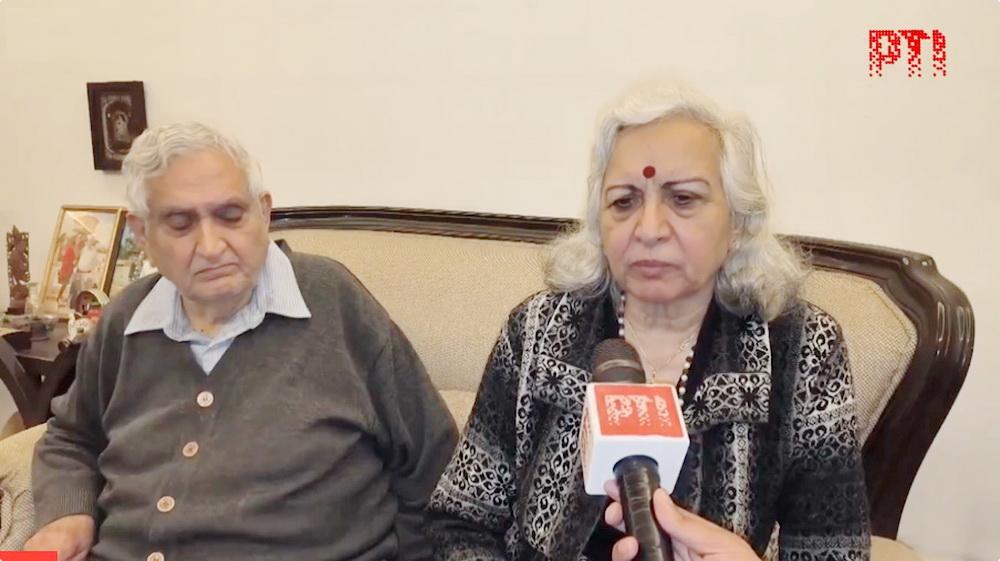
New Delhi: In what is being described as one of the biggest and most disturbing cyber fraud cases reported from the national capital, an elderly NRI doctor couple was allegedly duped of ₹14.85 crore after being subjected to a so-called “digital arrest” for nearly 15 days.
The victims — Dr Om Taneja (81) and his wife Dr Indira Taneja (77) — had returned to India in 2015 after spending nearly 48 years serving the United Nations in the United States. The couple currently resides in the upscale Greater Kailash-2 area of South Delhi and is actively involved in social and charitable activities.
A Phone Call on December 24 That Changed Everything
According to Dr Indira Taneja, the ordeal began on December 24, when she received a phone call from a man claiming to be an official of the Telecom Regulatory Authority of India (TRAI). The caller alleged that obscene and abusive calls had been made from a phone number linked to her identity and that 26 complaints had been registered against her. He further warned that her number would be disconnected.
When Dr Indira clarified that the number mentioned did not belong to her, the caller escalated the matter, alleging money laundering, fake bank accounts and serious financial crimes. She was told that a bank account had been opened in her name at a Canara Bank branch in Mumbai, which had been used for large-scale fraud.
Fear of ‘National Security’ and Arrest Threats
The scammers gradually shifted the narrative towards national security, citing provisions of the Prevention of Money Laundering Act (PMLA), FIRs, arrest warrants and even the Supreme Court of India. Dr Indira was warned that disclosing the matter to anyone could lead to immediate arrest and pose a threat to her and her husband’s life.
At this stage, the couple was psychologically placed under what the fraudsters termed a “digital arrest”, effectively isolating them from the outside world.
15 Days of Digital Confinement Under Constant Surveillance
From December 24 to January 9, the couple was kept under continuous surveillance through video calls. The scammers instructed them not to inform their children, relatives or friends, to restrict the use of WhatsApp and social media, and to keep video calls active even while stepping out of the house or visiting banks.
Dr Indira later recalled being repeatedly told: “You are under surveillance. If you speak to anyone, arrest is certain.”
Fake Police Officers, Supreme Court Officials and a ‘Judge’
During the course of the scam, the fraudsters posed as officials from Mumbai’s Colaba Police, duty officers and even Supreme Court authorities. At one point, a man wearing a police uniform appeared on a video call, identifying himself as ‘Vikrant Singh Rajput’, with police insignia visible in the background.
Dr Indira was also made to write multiple letters addressed to the Supreme Court, detailing her social service activities, NGO affiliations and trusteeships. She was assured that if the money was transferred “for verification purposes”, it would be refunded through the Reserve Bank of India (RBI) and that the couple would receive a “clean chit”.
A Scripted Visit to the Bank
Before every bank visit, the scammers coached Dr Indira with a detailed script. She was instructed to tell bank officials that the money was required for investment purposes, lending to a friend, or funding health and environmental projects.
When she visited the bank for the first time, the branch manager raised questions, but Dr Indira repeated the rehearsed explanation provided by the scammers.
Eight Transactions, ₹14.85 Crore Gone
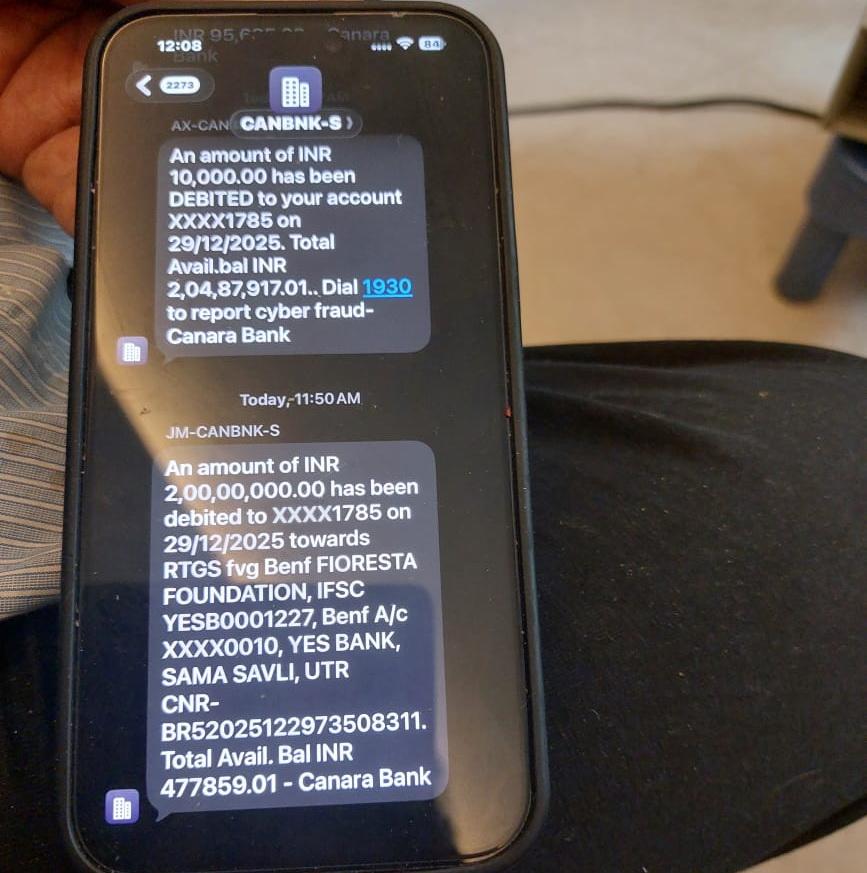
Over the span of 15 days, the fraudsters orchestrated eight RTGS transactions, involving amounts ranging from ₹1.99 crore to ₹2.10 crore, gradually siphoning off a total of ₹14.85 crore. The victims were repeatedly reassured that the transfers were merely procedural and that the entire amount would be 100 per cent refunded.
The Scam Unravels at the Police Station
On January 10, the scammers instructed Dr Indira to visit the local police station, claiming that the refund would be processed there through the RBI. Even at the police station, the fraudsters remained connected via video call and allegedly spoke rudely to the Station House Officer (SHO).
However, it was at the police station that the deception finally collapsed, and the couple realised they had fallen victim to a massive cyber fraud.
Evidence, Screenshots and Full Digital Control
The victims later submitted bank statements, SMS alerts, WhatsApp chats and call logs to the police. Canara Bank statements show that on December 30, 2025, ₹2 crore was transferred via RTGS. SMS alerts confirm that funds were credited to an account linked to Fioresta Foundation.
Screenshots from the victim’s phone also revealed that WhatsApp Screen Sharing / Screen Broadcast was active, indicating that the scammers had real-time access to the victim’s mobile screen, including banking apps, messages and notifications.
Police Probe Handed Over to IFSO
Delhi Police has registered an FIR and transferred the investigation to the IFSO cyber unit of the Special Cell. Authorities are currently tracing the money trail, examining fake documents, video call records and the wider digital arrest network involved in the scam.
Dr Om Taneja later admitted: “Not approaching the police earlier was our biggest mistake.”
A Stark Warning for Citizens
The incident serves as a grim reminder of how organised cybercrime syndicates are exploiting fear, psychological pressure and fake identities of government institutions to target unsuspecting citizens. Police have once again urged the public to immediately report suspicious calls or threats to the national cybercrime helpline 1930 or approach the nearest police station without delay.
With PTI and ANI inputs